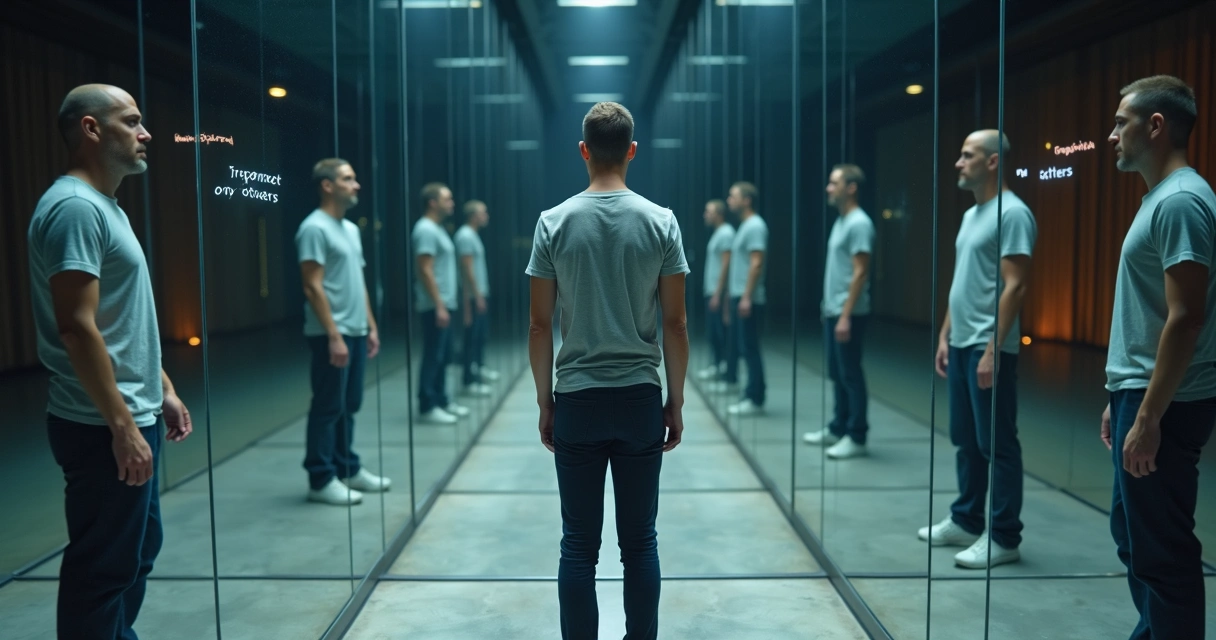


We all carry stories about what happened, what it meant, and what it says about us. Over time, those stories can shape our emotional habits. A missed opportunity becomes proof that we always fail. A hard conversation becomes evidence that people do not respect us. A season of grief becomes an identity we never question.
Narrative reframing is the practice of changing the meaning we assign to experience without denying reality.
This is not forced positivity. It is not pretending pain did not happen. We see it as a disciplined way to revisit the story, loosen rigid conclusions, and make room for a wiser emotional response.
Many of us have felt this in ordinary life. We tell a friend about a painful event and, while speaking, something shifts. The facts stay the same. Yet the emotional weight changes because the story changes. That is the power of reframing.
Why stories shape our emotions
Habitual emotions often come from repeated interpretation. If we keep telling ourselves, “I was rejected because I am not enough,” shame and anxiety can become familiar reactions. If we retell the same moment as, “That situation did not fit who I was becoming,” the emotional tone changes.
Our minds do not respond only to events. They respond to meaning. In our experience, people suffer not just from what happened, but from the hidden sentence attached to it.
The story guides the feeling.
This idea is supported by research. Studies from The Chinese University of Hong Kong found that shifting narrative perspective from first person to third person, together with psychological distance, reduced the emotional intensity of negative autobiographical memories. The effect was not small. It was strong enough to show that how we tell the memory changes how we feel it.
What narrative reframing really looks like
Narrative reframing does not mean replacing every hard story with a pleasant one. It means asking better questions and widening the frame. We move from a narrow, automatic interpretation to one that is more honest, mature, and useful.
A reactive story often sounds like this:
This always happens to me.
I cannot trust anyone.
I ruined everything.
A reframed story may sound like this:
This event touched an old fear in me.
I can learn to set clearer boundaries.
I made a mistake, and I can repair what is possible.
A good reframe keeps the truth of the event, but removes the distortion that turns pain into identity.

How to reframe a story in practice
We find that a simple process works better than trying to think positively in the heat of emotion. When the feeling is intense, structure helps.
You can move through these five steps:
Name the event in plain words. Stay close to facts.
Write the automatic story you attached to it.
Identify the emotion that story keeps producing.
Question what is incomplete, exaggerated, or old in that story.
Rewrite the story in a way that is true, broader, and emotionally cleaner.
For example, imagine we sent a message and received no reply. The event is simple. No reply yet. But the automatic story may be, “I am being ignored because I do not matter.” The emotion becomes sadness, anger, or fear. A broader story could be, “I do not yet know why there is no reply. My mind filled the gap with an old wound.” That reframe does not erase discomfort, but it lowers the charge.
Sometimes one sentence changes the entire inner climate.
Techniques that make reframing stronger
Some methods deepen the effect because they help us break emotional fusion with the original story.
One of the most effective is perspective shifting. Instead of retelling the event as “I,” we describe ourselves by name or as “he,” “she,” or “they.” That slight distance can reduce the emotional grip and increase clarity.
Another useful method is to ask these questions:
What else might this event mean?
What am I assuming without proof?
If someone I loved told me this story, what would I say?
What part of this reaction belongs to the present, and what part comes from the past?
We also see strong results when people turn the experience into a coherent story rather than a scattered mental replay. Research from the University of Denver found that stronger narrative quality, with cohesion and a clearer story arc, predicted greater reduction in negative emotion after stress. In simple terms, a better-formed story can help the nervous system recover.
Common mistakes to avoid
Not every reframe heals. Some only cover pain with nicer words. That usually backfires.
We suggest avoiding three traps:
Reframing too fast, before feeling the emotion.
Using spiritual or moral language to avoid grief, anger, or fear.
Creating a new story that sounds good but does not feel believable.
If the new narrative feels false, your body will reject it.
A strong reframe feels grounded. It gives more space, not more pressure. It sounds like relief, not performance.

How long does emotional change take?
Some shifts happen in minutes. We have seen a person move from shame to self-respect during one writing exercise. But habitual emotions usually have roots. They were rehearsed over years, often through family patterns, repeated disappointments, and private conclusions made long ago.
That is why repetition matters. One reframe can interrupt a pattern. Repeated reframing can build a new emotional default.
This is where practice becomes powerful. Research on an emotion regulation training programme from the University of Roehampton showed that increasing reappraisal through practices that included narrative reframing improved life satisfaction and reduced worry, suppression, and depressive symptoms. The gains remained even at a one-year follow-up.
That matters. It suggests that reframing is not just a momentary mental trick. It can support lasting emotional change when practiced with consistency.
Conclusion
Narrative reframing helps us change the emotional effect of a story by changing the meaning we keep repeating. We are not editing life into fiction. We are telling the truth with more depth, more context, and more responsibility.
When we do this well, old emotions lose some of their automatic force. We become less trapped by shame, fear, resentment, and helplessness. In their place, we create room for steadier states such as clarity, grief with dignity, self-respect, and discernment.
New meaning creates new feeling.
If we want different emotional habits, we need different stories. Not invented ones. Truer ones.
Frequently asked questions
What is narrative reframing?
Narrative reframing is the process of changing the meaning we give to an experience so that it creates a healthier emotional response. The facts do not have to change. What changes is the interpretation, the context, and the conclusion we draw from the event.
How can I use narrative reframing?
We can use it by writing or speaking about an event, identifying the automatic story attached to it, and then rewriting that story in a way that is more balanced and truthful. It helps to separate facts from assumptions, question old beliefs, and test a wider perspective.
Does narrative reframing really help emotions?
Yes, narrative reframing can reduce emotional intensity and support healthier regulation when practiced with honesty and repetition. Research and lived experience both suggest that changing how we frame an event can lower distress, reduce worry, and support more stable emotional patterns over time.
What are examples of narrative reframing?
A few examples are shifting “I failed, so I am not capable” to “I failed at this attempt, and I can learn from it,” or changing “They disagreed with me, so I am rejected” to “They saw it differently, and that does not erase my value.” Another example is moving from “This pain will define me” to “This pain is part of my story, not the whole of who I am.”
How long to see results with reframing?
Some people feel relief right away, especially when they identify a distorted story. For deeper emotional habits, results usually come through repeated practice over weeks or months. The more often we catch and rewrite old narratives, the more natural the new emotional response becomes.