


Many of us live by family rules we never agreed to out loud. We carry them into love, work, money, rest, and even the way we speak. One person always fixes things. Another stays quiet. Another succeeds, but then feels guilty. These are often unconscious family contracts.
Unconscious family contracts are silent loyalties that shape behavior, identity, and emotional choices across time.
We usually do not notice them at first. We just call them personality, duty, or fate. Then one day a pattern repeats again, and something in us says, “This is older than this moment.” That is often the first real opening.
When we renegotiate these contracts, we are not rejecting our family. We are changing our position inside the system. This takes honesty, calm, and patience. It also takes skill, because old roles often resist change.
How these contracts are formed
Family contracts begin early. A child reads the room before they read books. We learn what gets love, what causes tension, and what must never be said. In our experience, these lessons become inner commands.
- Do not outshine others.
- Be strong and do not ask for help.
- Keep the peace at any cost.
- Take care of everyone before yourself.
- Do not trust people outside the family.
These rules may have once served survival. A parent under stress may have needed a quiet child. A grieving family may have rewarded the one who stayed stable. A home marked by conflict may have praised the peacemaker. The contract made sense then. It may hurt now.
What protected us can later limit us.
This is why renegotiation is not rebellion for its own sake. It is maturity. We stop acting from old fear and start choosing from present awareness.
Signs you may be living under an old contract
Some signs are subtle. Others are loud. We may feel intense guilt when setting a boundary. We may choose partners who mirror family tension. We may feel responsible for the emotions of grown adults. We may hide our needs and call it kindness.
A strong emotional reaction to a simple adult choice often points to an older family agreement running in the background.
We have also seen this happen in money decisions. A person earns more, then sabotages it. Another wants rest, but feels lazy the moment they stop. Another speaks clearly in public, but becomes small around family. The setting changes. The contract stays.
Research also supports the value of working with family patterns. A meta-analytic review on parent-child and family-based treatment found a moderate added benefit over individual child treatment alone. We think this matters because many struggles are not only personal. They are relational.
How to begin renegotiating
The first step is not confrontation. It is observation. Before we change a contract, we need to see it clearly. We suggest starting with a simple review of repeating patterns in three areas: conflict, care, and self-expression.
- Notice where you feel guilty for being fully yourself.
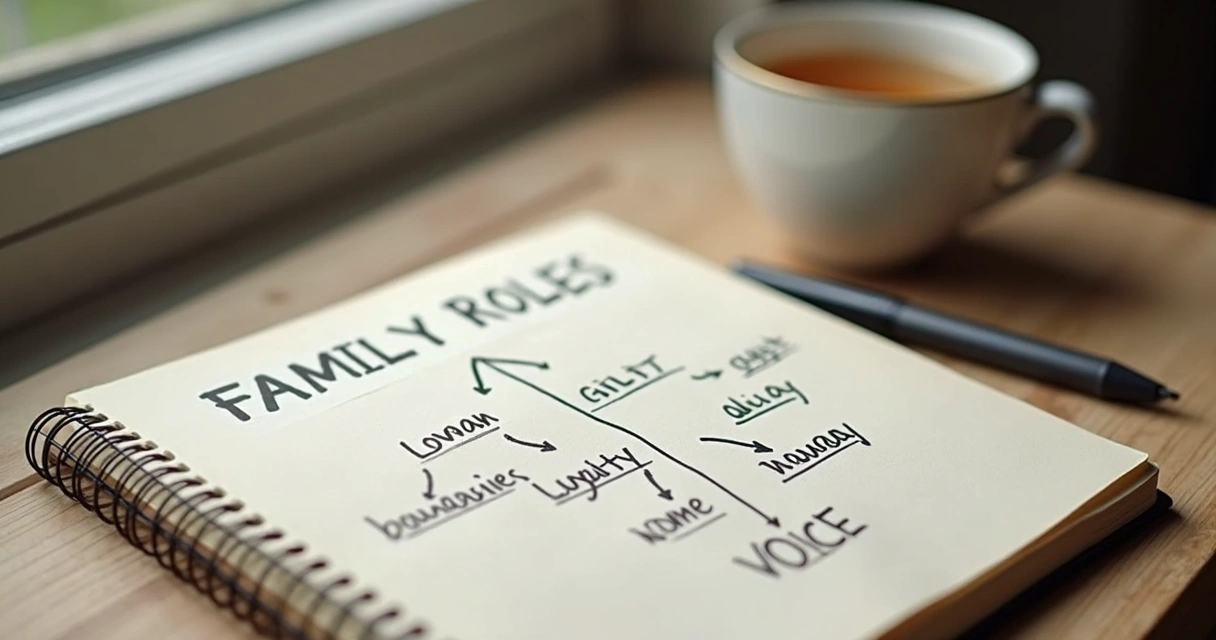
- Name the role you learned to play in the family.
- Ask what fear the role was trying to manage.
- Decide what part of that role you no longer want to keep.
This process can feel emotional. Sometimes people laugh when they first see the pattern. Then they get quiet. We have seen that silence often means the truth has landed.
Next, write a new inner agreement. Keep it plain. For example:
- I can love my family without carrying everyone.
- I can speak honestly without becoming disloyal.
- I can succeed without betraying where I came from.
Renegotiation starts inside before it becomes visible outside.
This matters because not every contract needs a direct family conversation. Some do. Some do not. In many cases, our new behavior is the real negotiation.
What makes change hard
Families seek balance, even when the balance is painful. If one person changes, others may react. They may mock the new boundary, increase pressure, or act hurt. This does not always mean the change is wrong. It may simply mean the old pattern is losing its hold.
We think it helps to expect resistance without turning it into drama. Calm repetition works better than long speeches. Clear language works better than blame.
For example, instead of saying, “You never let me live my life,” we can say, “I am making this choice now, and I know it may feel different.” This keeps dignity in the room.
There is also good reason to take family work seriously when patterns affect behavior and relationships. A meta-analysis on family therapies and adolescent outcomes found statistically significant gains over usual care and alternative therapies. We read this as a reminder that family structure and interaction can shape real-life results.

Practical ways to hold your new position
Change lasts when it is practiced. We may understand a pattern in one deep moment, but daily life is where the new contract is tested. That is why we suggest small, repeatable actions.
- Pause before saying yes out of habit.
- Take a breath before fixing someone else’s problem.
- Use one clear boundary sentence and repeat it if needed.
- Journal after family contact to notice triggers and gains.
- Choose one safe relationship where you can practice honesty.
Sometimes the shift is quiet. A person stops over-explaining. Another no longer answers every call at once. Another tells the truth kindly and then sits with the discomfort. These moments may look small from the outside. Inside, they are major acts of repair.
We also need care during this process. Rest helps. Reflection helps. Skilled support can help when guilt, fear, trauma, or confusion become too heavy to sort alone.
Conclusion
Renegotiating unconscious family contracts is not about winning against our past. It is about ending automatic loyalty to patterns that no longer fit who we are becoming. We can respect where we came from and still choose a new way to love, speak, work, and belong.
Some contracts dissolve through insight. Others through practice. Others through one brave sentence said at the right time. What matters is that we stop confusing old survival roles with identity.
Loyalty does not require self-abandonment.
When we do this work, we often feel both grief and relief. That makes sense. Something old is ending. Something more honest is starting.
Frequently asked questions
What are unconscious family contracts?
They are unspoken rules, roles, and emotional loyalties learned in family life. They shape how we act, what we allow, and what we fear, often without our full awareness.
How can I identify family contracts?
We can identify them by looking at repeating patterns, guilt around healthy choices, fixed family roles, and strong reactions that seem bigger than the present moment. Journaling and careful reflection often make them easier to see.
Is it worth it to renegotiate them?
Yes, when the contract causes pain, confusion, resentment, or self-betrayal. Renegotiation can lead to clearer boundaries, better relationships, and a stronger sense of self.
How do I start renegotiating today?
Start by naming one old role you still play, such as rescuer, peacemaker, or silent one. Then choose one small new action that breaks the pattern, and repeat it with calm consistency.
What are the benefits of renegotiating contracts?
The benefits may include less guilt, more emotional freedom, clearer communication, healthier limits, and choices that match present life instead of old family pressure.